Source Steel Pipe Flanges for Oil Gas and Water Systems
Compare 30 listings for steel pipe flanges from China suppliers offering carbon and stainless steel options. Buyers can evaluate flanged and welding types against GOST, DIN, and ANSI standards for industrial applications.
Key considerations
Products List




Comprehensive Sourcing Guide
Strategic Sourcing Guide for Steel Pipe Flanges
Navigating the global market for steel pipe flanges requires a disciplined approach that balances technical precision with rigorous supplier verification. Buyers entering this sector must understand that "steel pipe flanges" represent a broad category of critical pipeline components, where material integrity and dimensional accuracy are paramount for system safety. The procurement landscape is characterized by a wide variance in manufacturing origins, primarily concentrated in China, with specific hubs like Hebei, Shandong, and Wenzhou emerging as significant production centers. Sourcing decisions must be grounded in verified facts regarding material composition, manufacturing processes, and adherence to international standards rather than marketing assertions.
Technical Specifications and Material Integrity
The foundation of any successful flange procurement lies in the precise definition of technical specifications. The supplied data indicates that the core material composition for these components typically involves Carbon Steel and Stainless Steel. These materials are selected based on the specific operating environment, including pressure, temperature, and chemical exposure. Buyers must verify the exact grade of steel, as the mechanical properties of carbon steel differ significantly from stainless variants.
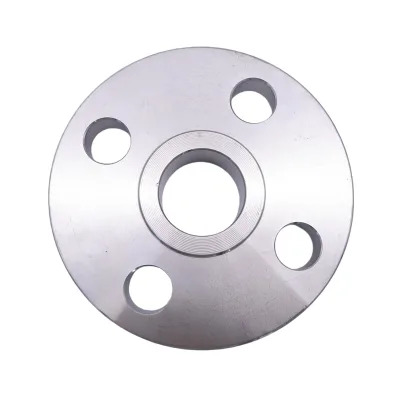
Manufacturing methods play a crucial role in the final product's performance. The available data highlights "Forging" and "Forged" as the primary production techniques. Forging is generally preferred for high-pressure applications because it aligns the grain structure of the metal, enhancing strength and durability compared to casting. The structural design of the flanges is consistently described as "Flanges," with specific types including "Welding Flange." The shape is noted as "Equal," and the angle is typically "90 Degree," which is standard for connecting pipe sections at right angles.
Dimensional specifications are equally critical. The observed model ranges vary significantly across different supplier listings, spanning from DN60 to DN1200, and in other instances from 1/2" to 72" or even 1/2" to 64". Wall thicknesses are specified as Sch10, with some ranges extending to Sch160. This variance underscores the necessity for buyers to define their exact requirements clearly, as a flange suitable for a low-pressure line may fail catastrophically in a high-pressure system. The sealing surface is a key interface detail, with data points indicating both "FF" (Flat Face) and "RF" (Raised Face) options. Selecting the correct sealing surface is vital for ensuring a leak-free connection when paired with the appropriate gasket.
Compliance, Standards, and Certification Verification
In the industrial sector, compliance is not merely a formality but a legal and safety requirement. The observed product data lists a comprehensive array of international standards, including GOST, GB, DIN, ANSI, JIS, and ISO. Specific listings also reference BSW and KS, indicating a global reach and the ability to meet diverse regional regulatory frameworks. For instance, one entry specifically cites DIN 400, while another highlights a standard range of 1/2" to 110".
Buyers must exercise extreme caution when evaluating certification claims. The provided facts list certifications such as ASME, ANSI, DIN, JIS, BS, GB, GS, KS, and API. However, these are presented as observed attributes of specific listings rather than universal guarantees for all products in the category. A responsible procurement strategy involves requesting current, valid certification documents from the supplier for the specific batch of goods being ordered. Relying on a general statement of compliance without verifying the certificate against the specific order number and material grade is a significant risk.
Furthermore, the standard "ASTM A182" is mentioned in the background context but flagged as low-confidence. Buyers should not assume this standard applies unless explicitly confirmed by the supplier's test reports. Instead, the procurement process should mandate that the supplier provides mill test certificates (MTC) that explicitly reference the agreed-upon standard, whether it be a specific DIN or ANSI grade, to ensure traceability and material authenticity.
Cost Drivers and Pricing Dynamics
The pricing structure for steel pipe flanges is influenced by several volatile factors. The observed price range in the market is vast, extending from $0.10 to $20,000. This enormous spread reflects differences in size, material grade, manufacturing complexity, and order volume. A small carbon steel flange will naturally cost a fraction of a large, high-grade stainless steel flange.
Minimum Order Quantity (MOQ) is another critical cost driver. The data shows an MOQ range from 1 to 1000 units. Suppliers with lower MOQs may charge a premium per unit to cover setup and handling costs, whereas high-volume orders can leverage economies of scale to reduce the unit price. Buyers must balance their inventory needs against cash flow constraints. Ordering in bulk reduces the unit cost but increases storage and capital tie-up. Conversely, smaller orders offer flexibility but at a higher marginal cost.
Additional cost factors include the complexity of the manufacturing process. Forged flanges generally command a higher price than cast alternatives due to the energy and labor intensity of the forging process. Customization is available, which can further impact the final price. Any non-standard dimensions, special material requirements, or unique packaging needs will likely incur additional charges. Buyers should also consider the "Business Term" options, such as FOB, CIF, and CFR, as these determine who bears the freight and insurance costs, significantly affecting the landed cost of the goods.
Typical Applications and Usage Scenarios
Steel pipe flanges are ubiquitous in industries requiring robust fluid and gas transport systems. The "Key Word" associated with these products is simply "Flange," indicating their fundamental role in piping infrastructure. The diverse range of sizes, from 1/2" to 4000mm in some specifications, suggests applications ranging from small-scale instrumentation lines to massive industrial process pipelines.
The "Welding Flange" type is particularly suited for permanent connections in high-pressure and high-temperature environments, such as oil and gas refineries, chemical processing plants, and power generation facilities. The "Flanged" connection type allows for easy assembly and disassembly, which is essential for maintenance and inspection in complex piping networks. The "FF" and "RF" sealing surfaces cater to different gasket requirements, with Raised Face flanges often used for higher pressures and Flat Face flanges for lower pressures or specific flange mating requirements.
The "Equal" shape and "90 Degree" angle are standard for creating right-angle turns in piping systems. The "Round" head code suggests a specific design feature that may be relevant for bolt hole patterns or specific fitting requirements. Understanding the specific application is essential for selecting the correct flange type, as using a flange designed for low-pressure water service in a high-pressure steam line could lead to system failure.
Supplier Evaluation and Operational Logistics
Evaluating potential suppliers requires a deep dive into their operational capabilities and logistical strengths. The data indicates that the primary origin for these products is China, with specific locations including Hebei, Cangzhou, Shandong, and Wenzhou. Each of these regions may have different specializations or supply chain efficiencies. For example, Hebei and Cangzhou are known for significant steel production, while Wenzhou has a strong reputation for valve and flange manufacturing.
Logistical parameters are critical for supply chain planning. The "Loading Port" is frequently cited as Tianjin, a major hub for maritime shipping. The "Shipment" methods include "by Sea" and "by Air," with "Air/Sea" being a common freight method. The "Delivery Date" can vary from "Within 30 Days" to "It Depends on The Situation," highlighting the need for clear communication regarding lead times. Buyers should establish a realistic timeline based on the supplier's current production load and the complexity of the order.
Packaging is another area where supplier capabilities vary. Options range from "Wooden Case" and "Plywood Case" to "Pallet," "Bunded," and "PP Bag & Plywood Cases." Some listings even mention "Solid Bicycle Saddle" or "50PCS/Carton," which may indicate specialized packaging for smaller components or specific customer requirements. The ability to provide "Packing, Solid Bicycle Saddle" or custom requirements suggests a level of flexibility that can be valuable for protecting goods during long-distance transit.
Quality Control and Long-Term Procurement Strategy
Quality control is the linchpin of a successful procurement strategy. The data mentions a "Machining Tolerance" of up to +/- 0.1mm, according to customer drawings. This level of precision is essential for ensuring that flanges fit correctly and seal properly. Buyers should verify that the supplier has a robust quality assurance process that includes dimensional inspections, material testing, and pressure testing where applicable.
The availability of samples is a positive indicator of supplier confidence. The fact that suppliers "Can Provide" samples allows buyers to physically inspect the product quality, finish, and dimensional accuracy before committing to a large order. This step is crucial for validating that the supplier's claims match the physical reality of the product.
For long-term procurement, building a relationship with a supplier who offers "Customization" is advantageous. The ability to tailor products to specific needs, such as unique wall thicknesses or special material grades, ensures that the procurement strategy remains flexible and responsive to changing project requirements. Additionally, the "Export to: All Over The World" capability suggests that suppliers are experienced in handling international logistics and compliance, which reduces the administrative burden on the buyer.
In conclusion, sourcing steel pipe flanges requires a methodical approach that prioritizes technical verification, compliance validation, and logistical clarity. By focusing on the specific attributes of material, manufacturing process, and standard adherence, buyers can mitigate risks and ensure the procurement of high-quality components that meet the rigorous demands of industrial applications. The vast range of available options, from standard sizes to custom specifications, offers significant opportunities for optimization, provided that the buyer maintains a disciplined and evidence-based selection process.
FAQs
What materials are used for steel pipe flanges?
Steel pipe flanges are typically manufactured using Carbon Steel or Stainless Steel. Buyers must verify the exact grade of steel as mechanical properties differ significantly between these materials for specific operating environments.
Which manufacturing process is used for these flanges?
The primary production technique for these flanges is Forging. This method aligns the metal grain structure to enhance strength and durability, making it preferred for high-pressure applications compared to casting.
What international standards do these flanges comply with?
These flanges comply with standards such as GOST, GB, DIN, ANSI, JIS, and ISO. Buyers should request valid certification documents for the specific batch to ensure traceability and material authenticity against these standards.
Can suppliers provide samples for verification?
Yes, suppliers can provide samples for physical inspection. This allows buyers to verify product quality, finish, and dimensional accuracy before committing to a large order, ensuring claims match the physical reality of the product.
What is the typical delivery time for orders?
Delivery times vary from within 30 days to depending on the situation. Buyers must establish a realistic timeline based on the supplier's current production load and the complexity of the specific order requirements.
How are these flanges packaged for shipment?
Packaging options include Wooden Cases, Plywood Cases, Pallets, and Bunded configurations. Some suppliers offer custom requirements like PP Bags, ensuring goods are protected during long-distance transit to various global destinations.